
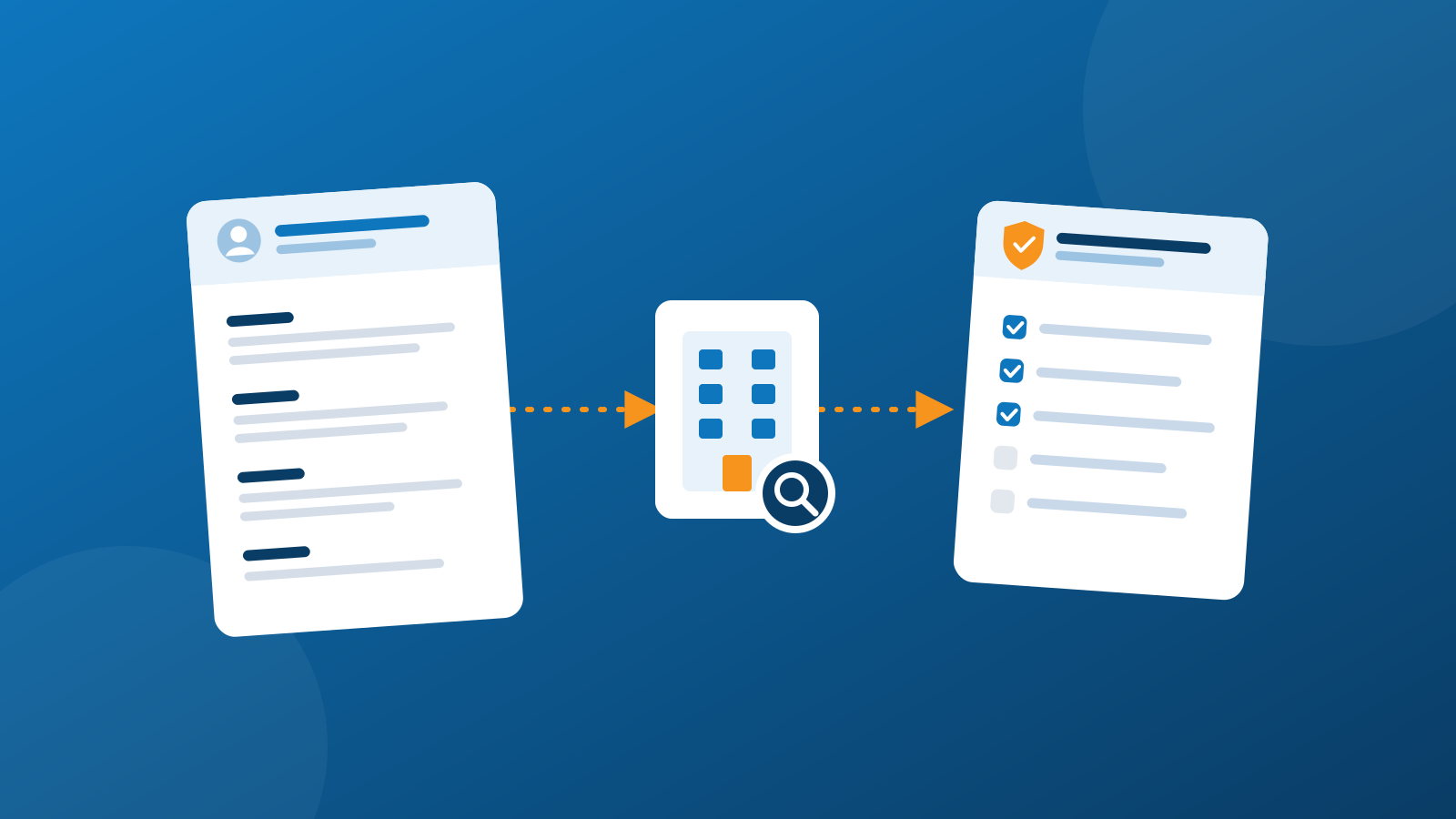
A resume is a candidate's own account of their history. An employment verification checks that account against the record: it confirms with past employers that the candidate actually worked where they say, when they say, in the role they say.
It's one of the simplest checks in a background screening program, and one of the most often skipped or rushed. That's a mistake, because work history is where many hiring decisions are really made.
Why employment verifications matter
- Resumes aren't always accurate. Candidates stretch dates to hide gaps, upgrade job titles, or list employers they never worked for. Some of it is honest error; some isn't. Either way, you're making a hiring decision on that information.
- Experience drives the decision. If you're hiring someone because they ran a warehouse team for five years, you need to know they actually did.
- It protects against negligent hiring claims. If an employee harms someone and it turns out a basic check would have revealed a problem, the employer can be held responsible. A documented verification shows you took reasonable care.
- It surfaces gaps worth a conversation. An unexplained gap isn't a red flag on its own, but it's worth asking about, and it may point to jurisdictions your criminal search should cover.
- It improves quality of hire. Candidates who are honest about their history are, on the whole, a safer bet. Verification rewards them and filters out those who aren't.
What a verification confirms, and what it usually doesn't
| Usually confirmed | Sometimes not available |
|---|---|
| Dates of employment | Reason for leaving |
| Job title or position | Performance or work quality |
| Employer name and location | Eligibility for rehire |
| Sometimes: full-time or part-time status | Salary (and in many places you shouldn't ask) |
Many employers have a policy of confirming only dates and title, mostly out of caution about defamation claims. That's normal, and it isn't a sign of a problem with the candidate. If you need insight into performance or fit, that's what reference checks are for, and they work best as a separate step.
How to make verifications more effective
- Collect complete information up front. Ask for each employer's full legal name, city and state, dates (month and year), title, and a supervisor or HR contact. Incomplete applications are the most common cause of delays.
- Verify independently. Don't rely only on the phone number or email the candidate provides. Look up the employer's main number yourself, or let your screening provider do it. A friend posing as a former manager is an old trick.
- Watch for employers that don't exist. "Diploma mill" style fake companies, complete with websites and answering services, are used to cover gaps. Confirm the business is real through state business registrations or other public records.
- Decide how far back to go. Seven to ten years, or the last two or three employers, covers most roles. Senior or sensitive positions may justify going further.
- Match the scope to the role. For positions where a specific job history really matters (licensed trades, finance, healthcare, working with children), verify every employer listed for the period, not just the most recent one.
- Get written authorization that covers it. Make sure your candidate consent form specifically allows contacting past employers.
- Plan for closed and hard-to-reach employers. Companies close, merge or outsource verifications. W-2s, pay stubs or tax records can sometimes fill the gap when the employer can't.
- Compare, don't just collect. Look at what comes back against what the candidate told you. Small date differences are common; a different title, a missing employer or months of unexplained difference are worth a follow-up conversation.
- Set expectations on timing. Most verifications come back within a few business days, but some employers take longer. Build that into your hiring timeline rather than skipping the check.
Compliance and other things to keep in mind
- The FCRA applies when a third party does it. If a background screening company verifies employment for you, it's a consumer report. You need a standalone disclosure and the candidate's written authorization first, and the pre-adverse and adverse action process if the results affect your decision. See The Pre-Adverse and Adverse Action Process, Explained.
- Watch salary history laws. Many states and cities, including Massachusetts and New York, restrict asking about or relying on a candidate's pay history. Don't request salary in a verification where it's restricted, and redact pay figures from any W-2 or pay stub used as proof of employment.
- Be consistent. Apply the same verification standards to every candidate for the same role. Verifying some candidates more thoroughly than others invites discrimination claims.
- Give candidates a chance to explain. Discrepancies have innocent explanations more often than you'd think: a company renamed after a merger, a staffing agency that was the legal employer, a title that changed mid-job. Ask before you decide.
- Don't treat "no response" as a negative. An employer that won't return a call says nothing about the candidate. Document your attempts and look for other proof.
- Keep records secure. Verification results are part of the candidate's screening file. Store them securely and dispose of them properly when you no longer need them.
The bottom line
Employment verification is a small step with a big payoff. It confirms that the experience you're hiring for is real, helps protect you from negligent hiring claims, and treats every candidate fairly when it's done consistently and in compliance with the FCRA.
At Safer Places, we verify employment directly with past employers, independently confirm contact information, and handle the follow-up so your team doesn't have to. Questions about adding verifications to your screening program? Contact us or call (508) 947-0600.
This article is for general information only and isn't legal advice. Employment screening laws vary by state and city, so consult an employment attorney about your specific situation.